
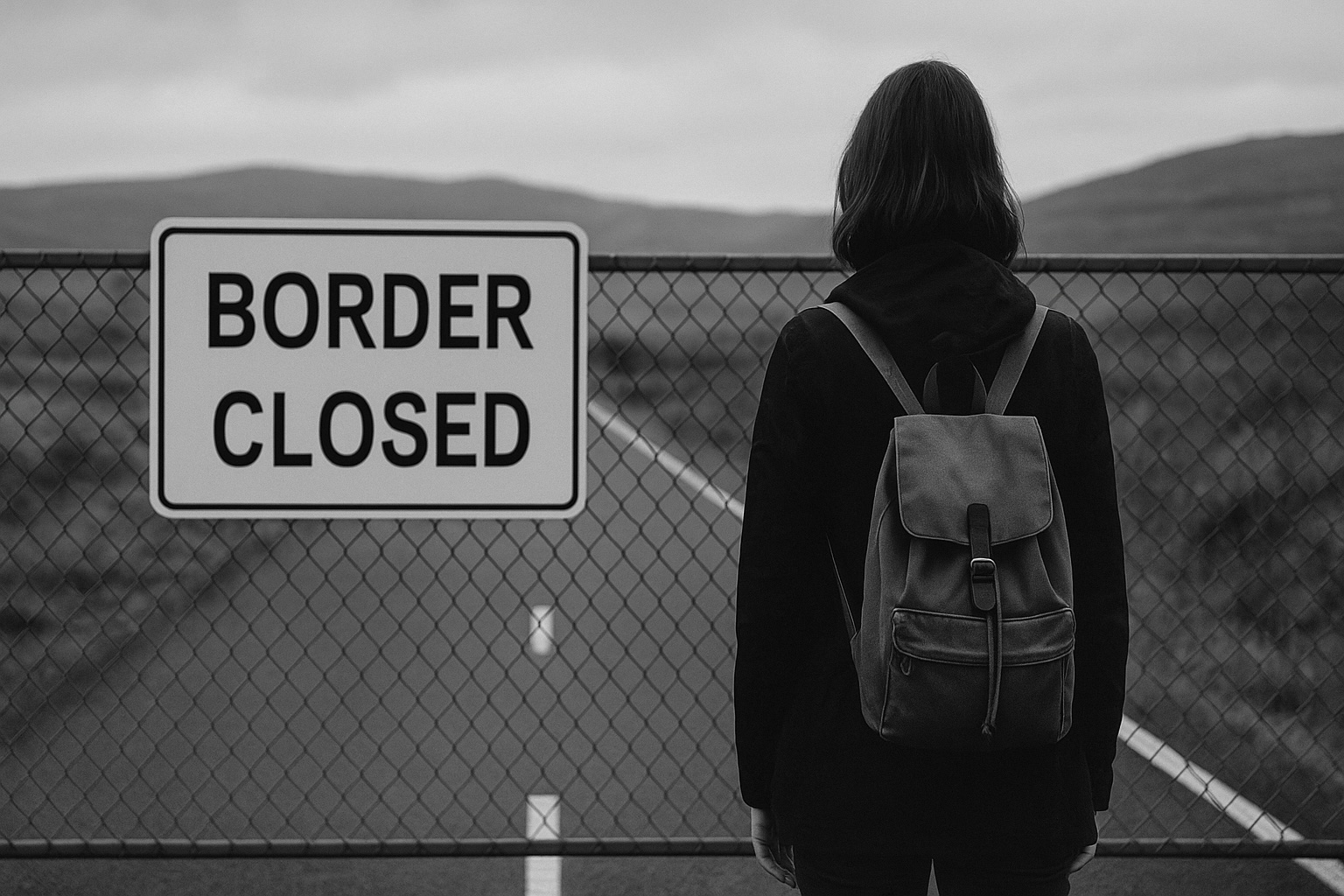
There’s something I’ve been wondering lately, and I don’t think I’m the only one.
Is the priviledged life we knew—the life of travel, of movement, of choosing to live somewhere else because we can—slowly disappearing?
I don’t mean vanishing in a dramatic, apocalyptic way. I mean quietly. Like someone dimming the lights one notch at a time until suddenly you’re sitting in the dark, wondering when it happened.
Take the idea of moving overseas. Living in another country used to feel like a romantic possibility. You’d go to Thailand, Portugal, Vietnam—wherever—and start a new chapter. No fanfare, just a one-way ticket and a visa that didn’t ask too many questions.
These days, it’s harder. The rules have changed. The vibe is shifting.
Thailand’s tightening long-stay rules. Malaysia’s MM2H visa—once popular with retirees and expats—now demands higher income thresholds and stricter conditions. The Philippines is getting fussier too. Countries that once welcomed wanderers with open arms now want proof that you’re not just drifting around with a MacBook and a vague sense of purpose. And then there’s the other angle—these Westerners, cashed up and happy to splash it around, can help boost the local economy. And fair enough. Many of these countries have been through the wringer. But now, they’re realising there’s money to be made not just from tourism, but from lifestyle migrants who come for the low cost of living and end up living large by local standards. So why not charge for it? Why not set a price on paradise?
It’s not just the paperwork. It’s a broader sense that the world is… pulling the shutters down. Not slamming them. Just nudging them closed.
Travel itself feels more fragile
I used to think of air travel as routine. Book it, board it, go. Now it feels like it could vanish at any moment. A strike here, a fuel issue there, geopolitical tension just beneath the surface. And prices? Through the roof.
Ask anyone trying to get in or out of Europe this year. Airports are jammed. Flights cancelled. Borders clunky. It feels like a system that’s fraying at the edges—not collapsing, but definitely strained.
And once you land? That old fantasy of swanning around like a curious, respectful visitor is starting to wear thin.
What if tourism itself is on borrowed time?
Tourism, the way we’ve known it, might not last much longer. Cities like Venice, Amsterdam, Kyoto, and Barcelona are pushing back against mass visitors. Not because they hate tourists, but because they’re drowning in them. Locals are priced out, public spaces clogged, communities stretched thin.
Even in places like Bali or Chiang Mai—long-time playgrounds for Western travellers—there’s rising tension. Social media’s full of warnings from locals: “If you don’t respect the culture, don’t come.”
And let’s not mention how welcoem the United States makes foreigners feel if you are not from certain places.
There is a shift. Its slow and grinding like a slow boat turning. One more reminder that the golden age of casual, guilt-free movement is winding down. The idea of shifting millions of people to other places in the world to go and look at stuff is taking on absurd proportions. Will the tourism industry collapse under the weight of its own bowels?
It’s not just that it’s getting harder to travel, and to enter other countries. It’s also starting to feel like tourists are less welcome. Like the music’s still playing, while the room slowly empties.
Didn’t we used to believe in a global village?
That’s the strange part. For decades we were told the world was becoming one. That borders were softening, cultures blending, the internet knitting us all into a shared existence.
You could be from Perth and work from Hanoi. Fall in love in Lisbon. Learn Thai. Watch Korean dramas. Eat Ethiopian food in Melbourne. We were all becoming “global citizens,” whatever that meant.
But now?
We’re retreating. Not just physically, but ideologically. Nationalism’s on the rise. Countries are clinging to identity, sovereignty, border control. Even online—supposedly the most borderless place of all—we’re splitting off into language silos, political tribes, and geo-fenced media bubbles.
More flags. Less common ground.
A subtle but unmistakable drift toward stay in your lane.
It’s not all hostile. Some of it is just protection. Some of it is fatigue. But the effect is the same: a world less open, less porous, more local.
So maybe the real question isn’t whether we can travel.
It’s whether we’ll even want to. Whether the freedom we once felt out there still exists—or whether that door has quietly closed behind us.
What if we can’t leave?
And this is where it gets psychological.
For a long time, part of the appeal of travel wasn’t just seeing new places—it was the idea that we could always leave. That reinvention was always one flight away.
Unhappy? Move countries.
Bored? Change hemispheres.
Tired of yourself? Be someone else somewhere new.
But if that’s no longer possible—if the gates are closing, if the world is growing cautious, if elsewhere becomes harder to reach—what does that mean for us?
Maybe it means we have to stay. Not forever. But more than we’re used to. Maybe we’ll need to make peace with where we are. Build lives not out of novelty, but out of presence.
Maybe we’ll stop outsourcing meaning to movement.
And maybe, just maybe, that will be a good thing.
Or maybe it’ll feel like something precious is slipping through our fingers.
I don’t know. I’m just watching the lights dim and wondering:
Did we imagine the whole thing wrong?
Or did the world quietly change while we weren’t looking?